


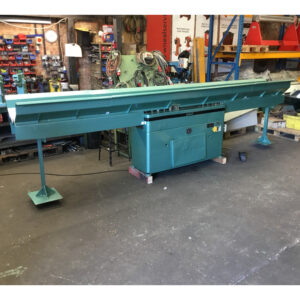
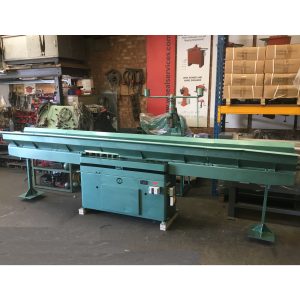
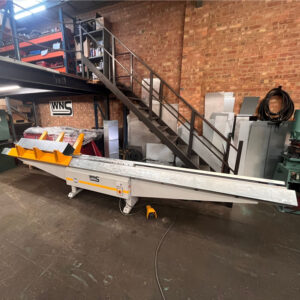
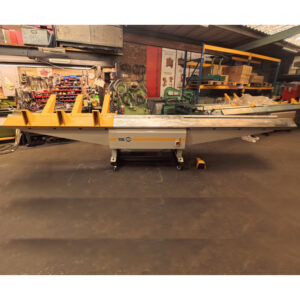
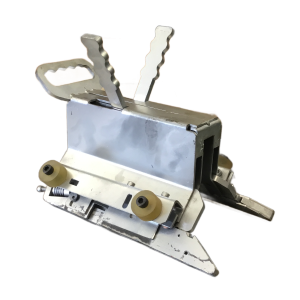


Looking for a RAS Ductseamer or DuctZipper? WNS does not manufacture new RAS machines — but with over 45 years' experience sourcing, reconditioning and servicing them, we are one of the most trusted names in the UK for used and reconditioned RAS duct seaming equipment. This guide walks through how RAS Ductseamers and DuctZippers work, the difference between V-form and L-form machines, and how to keep an existing machine running with quality parts, guide fences and AutoPilot Pilot Guide Carriages.
One-pass duct seaming
What is a RAS Ductseamer or DuctZipper?
A RAS Ductseamer or DuctZipper is a dedicated duct seaming machine that produces longitudinal seams along the edges of square or rectangular cross-section ducts. Traditional methods rollform a receiver lock, rollform a flange, then connect the two and close the seam — three separate steps. RAS technology takes all three down to one: insert the material, run it through, and the machine forms and closes the seam in a single smooth pass, giving a clean joint, extremely tight ducts and fast throughput.
Ductseamer is the name for RAS's standard duct seaming machine (models 22.81 & 22.82), while DuctZipper is RAS's automated line (models 20.10 & 20.12) built to work with the AutoPilot material handling system for higher throughput. Both use rows of seaming rollers — 15 roller shafts fitted with seaming rollers plus nine intermediate rollers in an overhead seaming bar — and are simple, reliable machines that can be operated by one person.
From flat sheet to finished seam
How a DuctZipper forms a duct seam
The in-line design moves through the machine along with the duct work, giving the operator the best access when inserting the sheet while the machine supports the duct as it forms and closes the seam.

AutoPilot & SealJet
The AutoPilot automates the duct seaming process with minimal operator involvement. Combined with the support arms of the material guidance system, it moves with the material in tandem through the machine — where previously two operators were needed, a single operator can now complete the work. To finish a duct with multiple seams, the operator simply puts the semi-finished duct cross-wise onto the guidance system and slides it back to the entry point.
The RAS SealJet injects an exact amount of Mez-Bluemastic gel sealant into the base of the seam just before the DuctZipper's forming rolls close it, sealing the joint without any sealant being squeezed out — leaving both the duct and the machine clean.
Two working positions
DuctZipper V-form vs L-form — what's the difference?
A V-form DuctZipper holds the duct edges in a V-shaped position so sheets slide by gravity to the connection point — a simple, workshop-friendly setup that suits small and medium-sized air ducts.
On the L-form DuctZipper the working position is rotated by 45 degrees: the horizontal flange of the duct rests on the table while the vertical flange points straight up, and gripping grooves in the vertical wall let the operator easily hold and guide the duct through the machine. This is specifically designed for large ducts — forming rolls stay easily accessible for maintenance, seaming accuracy is improved with less distortion of the duct cross-section, and with the AutoPilot clamping the next duct as soon as the first is removed, operating speed doubles. Even very large ducts can be produced with only two operators.
In the WNS range this shows up as the RAS Ductseamer 22.81 & 22.82 and DuctZipper 20.10 & 20.12 (V-form), and the DuctZipper 20.10-L & 20.12-L (L-form) for larger duct sizes.
Engineered for ductwork
The history of RAS duct seaming machines
Duct seams were traditionally formed and closed in separate rollforming and closing operations. RAS engineering combined these steps into dedicated Ductseamer and DuctZipper machines, then added AutoPilot material handling to automate the process further — technology WNS has spent over 45 years sourcing, reconditioning and keeping running in UK workshops.
Traditional method
Three steps to one seam
Before dedicated duct seaming machines, fabricators rollformed a receiver lock, rollformed a flange, then connected the two and closed the seam by hand or with a separate closer — three operations for every seam.
RAS Ductseamer
One machine, one pass
RAS engineered a duct seaming machine that inserts, forms and closes the seam in a single continuous pass, using rows of seaming rollers driven through the frame.
DuctZipper & AutoPilot
Automated material handling
The DuctZipper line paired the seaming machine with the AutoPilot, a support-arm system that moves with the duct so a single operator can complete work that previously needed two.
SealJet
Sealed seams as standard
The SealJet accessory injects sealant into the seam base immediately before the forming rolls close it, giving an airtight joint with no visible sealant and no mess.
Today
Kept running by WNS
RAS Ductseamers and DuctZippers remain in daily use across UK duct shops. W. Neal Services has over 45 years’ experience sourcing, reconditioning, servicing and supplying spares for them.
From the archive
What the manufacturers' literature said
Sales brochures from RAS and Firmac describe the same duct seaming process in their own words.
“The DuctZipper in L-shape is specifically designed for large ducts. Gripping grooves in the vertical wall let the operator easily hold and guide the duct while passing it through the machine.”
RAS DuctZipper Brochure
“RAS technology and engineering have taken the seaming process from the traditional three steps down to only one. It's so simple: insert material, run through… that's it. Quick. Safe. Tight.”
RAS DuctZipper Brochure — WNS Literature
“The Nu-Loc duct seamer is ideal for closing straight ducts ensuring the seam is approved for low, medium and high pressure applications — arguably the fastest seam closer on the market today.”
Firmac Brochure
Machines & accessories
The RAS duct seaming range at WNS
From standard Ductseamers to automated DuctZippers and the accessories that keep them running, here's what WNS sources, reconditions and stocks. Each type below links straight into our live stock.
RAS 22.81 / 22.82
RAS Ductseamer (V-Form)
The classic RAS duct seaming machine, forming longitudinal seams on square and rectangular ducts in a single pass. Simple and reliable, operated by one person.
View →
RAS 20.10 / 20.12
RAS DuctZipper (V-Form, Automatic)
The automated line, built to work with the AutoPilot material handling system for higher throughput on small and medium ducts.
View →
RAS 20.10-L / 20.12-L
RAS DuctZipper (L-Form)
Working position rotated 45°, with gripping grooves for guiding large ducts — operating speed doubles with the AutoPilot fitted.
View →
RPGC
Pilot Guide Carriage (AutoPilot)
Automates material handling through the Ductseamer or DuctZipper, so the operator clamps the next duct while the previous one is finished.
View →
RAS-GUIDES
Replacement Guide Fence
Genuine replacement guide fences for RAS Ductseamers (RSG2440) and DuctZippers (RZG1960), sold as a pair complete with fixing bolts.
View →
RAS-PARTS
RAS Spare Parts
Forming rolls and roll shafts for RAS 22.81 & 22.82, backed by our experience servicing and repairing RAS duct seaming machines.
View →
In stock now
Used & reconditioned RAS machines
Where they're used
Applications & industries
HVAC Ductwork
Square and rectangular duct seam fabrication for heating, ventilation and air-conditioning installs.
Sheet Metal Fabrication
Production seaming for fabrication shops running high volumes of ductwork.
Facilities & Refit Contractors
In-house duct production for building-services teams and refit contractors.
Duct Manufacturing Workshops
Complete workshop set-ups combining RAS seaming machines with rollforming and folding equipment.
After the sale
Spare parts, service & machinery wanted
A RAS Ductseamer or DuctZipper is a serious investment, even second-hand. WNS has over 45 years' experience reconditioning, servicing and repairing RAS duct seaming machines, and stocks genuine forming rolls, roll shafts, replacement guide fences and AutoPilot Pilot Guide Carriages to keep an existing machine running.
RAS spare parts
Forming rolls & roll shafts for RAS 22.81 & 22.82.
Shop parts →
Service & repair
Over 45 years' experience servicing RAS duct seaming machines.
Book service →
Machinery wanted
Got a RAS machine to sell? We buy quality used duct seamers.
Get a quote →
Setting up a duct shop?
WNS 'One Stop' Duct Manufacturing Workshop
Let WNS supply, source and co-ordinate your entire duct manufacturing workshop — RAS seaming machines, rollformers, folders and more from a single supplier.
Find out more →
The WNS difference
Why choose W. Neal Services Ltd?
Buying a used machine is a long-term decision, so it pays to buy from a specialist who genuinely knows how to recondition and support it — not just resell it.
Over 45 years reconditioning RAS machines
Over four decades of sourcing, reconditioning and servicing RAS Ductseamers and DuctZippers means we know these machines inside out.
Genuine spare parts stocked
We stock forming rolls, roll shafts, guide fences and Pilot Guide Carriages, so a worn part never means weeks of downtime.
Extensive knowledge base
A specialist team that genuinely knows duct seaming. Tell us what you fabricate and we will match the right machine — no upselling.
Internationally recognised WNS brand
Known to fabricators across the UK, Europe and worldwide, with machinery and parts supplied and shipped internationally.
Fully checked used & reconditioned machines
Every RAS machine we sell is inspected and reconditioned where needed, backed by UK service and spare parts.
One-stop duct workshop set-up
Beyond RAS machines, WNS can supply, source and co-ordinate an entire duct manufacturing workshop from a single supplier.
Know the terms
Duct seaming glossary
Common questions
RAS Ductseamer & DuctZipper FAQs
What is a RAS Ductseamer or DuctZipper?
A RAS Ductseamer or DuctZipper is a duct seaming machine that produces longitudinal seams along the edges of square or rectangular ducts in a single pass, replacing the traditional three-step rollform-and-close process.
What's the difference between a V-form and L-form DuctZipper?
A V-form DuctZipper holds the duct in a V-shaped position so sheets slide by gravity to the connection point, suiting small and medium ducts. An L-form DuctZipper rotates the working position 45°, resting the horizontal flange on the table with the vertical flange up, for large ducts.
Does W. Neal Services sell new RAS machines?
No — WNS does not manufacture or supply new RAS machines. We specialise in sourcing, reconditioning and servicing used RAS Ductseamers and DuctZippers, and stock genuine spare parts, guide fences and AutoPilot Pilot Guide Carriages.
Do you supply spare parts and servicing for RAS machines?
Yes — we supply forming rolls and roll shafts for RAS 22.81 & 22.82, genuine replacement guide fences, and have over 45 years’ experience servicing and repairing RAS duct seaming machines.
Is a replacement guide fence available?
Yes. We stock replacement guide fences for RAS Ductseamers (RSG2440) and DuctZippers (RZG1960), sold as a pair complete with fixing bolts.
Do you ship RAS machines and parts to Europe and worldwide?
Yes. We supply RAS Ductseamers, DuctZippers and spare parts across the UK, Europe and worldwide. Contact our team for a delivered price.