







Looking for a bending rolls machine? Whether you're rolling ductwork cylinders, cladding cones or heavy plate sections, the right bending rolls (or "slip roll") turns flat sheet into curved and round work without a forge. This guide walks through how bending rolls work, the difference between hand, power and pyramid machines, and which model in the W. Neal Services range fits your fabrication — from bench rolls for light trim work to heavy-duty pyramid rolls for structural plate.
The machine behind every rolled cylinder
What is a Bending Roll (Slip Roll)?
A bending roll — also called a slip roll — is a machine with two or three parallel rolls that curve flat sheet metal into cylinders, cones and curved panels. The sheet is fed between the rolls and progressively curved as it passes through, with the operator turning a handle (or a motor driving the rolls) to feed the material back and forth until the required curve or diameter is reached.
Most machines use an initial pinch design, where the back roll pinches the leading edge of the sheet against the front roll before bending begins — minimising the flat, unformed section left at each end of the finished cylinder. Heavier machines use a three-roll pyramid arrangement, with an adjustable top roll for setting the curve in thicker plate.
Step by step
How to roll a cylinder on bending rolls
Whether hand-cranked or power-driven, the sequence is the same. Here is how a cylinder is rolled on the shop floor — and where a cone rolling attachment extends the job.
Cone rolling & accessories
Most WNS and Isitan bending rolls can be fitted with a cone rolling attachment, letting developed cones pivot freely as they're rolled — typically at around half the machine's rated mild steel capacity. Wire grooves machined into the rolls let thinner-gauge sheet be rolled with a wired edge for extra rigidity, and rules fitted to the frame assist accurate top-roll positioning when setting up a job.
Clearing up the jargon
Bending rolls, slip rolls or plate rolls — what's the difference?
In everyday shop talk the terms are used interchangeably. Slip roll is the term more common in general sheet metal trade, while bending rolls and plate bending rolls describe the same type of machine used on heavier gauge steel plate. A pyramid bending roll has three rolls arranged in a triangle, with the top roll adjustable for setting the curve — the standard configuration for heavier-duty machines.
An initial pinch machine positions the back roll to grip the sheet before bending starts, reducing the flat section left at each end of the cylinder. Whatever you call it, when buyers search for a slip roller 600mm, a hand bending rolls machine or a power bending machine price, they're almost always after the same thing: a reliable machine to curve flat sheet into round or tapered work.
A history of rolling flat into round
The history of bending rolls
Bending rolls have been turning flat sheet into cylinders, tanks and ductwork for well over a century. The machines evolved from simple hand-cranked frames into powered and pyramid designs, yet the core idea — pinching and progressively curving the sheet between parallel rolls — has barely changed.
LATE 1800S–1900S
Hand-cranked rolling begins
Early "slip roll" and bending machines, hand cranked with simple two or three roll designs, let sheet-metal shops curve boiler shells, tanks and ducting without a forge.
EARLY–MID 1900S
The initial pinch design
Machines like the Keetona bending rolls introduced the "initial pinch" back roll, gripping the sheet before bending to minimise the flat, unformed ends of a rolled cylinder.
MID 1900S
Pyramid & cone rolling
Three-roll pyramid machines, with an adjustable top roll and cone-rolling attachments, let one machine roll parallel cylinders and tapered cones alike.
1960S–1980S
Power feed arrives
Geared motors and footswitch control replaced the hand crank on production machines, driving the front rolls at a controlled speed while the operator's hands stayed free to guide the sheet.
1990S–2000S
Heavier capacities, safer controls
Mechanical and hydraulic pyramid rolls scaled up to 20mm+ steel plate, with forward/reverse joystick control and kick-strip emergency stops becoming standard.
TODAY
British-built, still turning
W. Neal Services manufactures hand and power bending rolls in the UK, alongside Isitan's imported range, supplying new, used and reconditioned machines with UK parts and service.
From the archive
What the old manufacturers' literature said
Vintage sales brochures from bending rolls manufacturers describe the same machines in their own words — a record of how bending rolls have been built and sold over the decades.
“Keetona Initial Pinch Bending Rolls minimize flat spots as both the start and finish of formed cylinders. The all-steel construction of the rolls ensures that they are virtually unbreakable and the rigidity of these machines is such that they need not be permanently fixed to a foundation.”
Keetona — Bending Rolls Brochure
“The TRTS are top roll to slip machines enabling infinite diameter cylinders to be formed around the top roll... The formation of the rolls, with deflecting back roll moving in a vertical slideway, parallel for the front rolls, contributes to the initial pinching of the material.”
Morgan Rushworth — TRTS Brochure
“The PBR robustly fabricated range of pyramid bending rolls are designed for forming infinite diameter cylinders around the top roll... A geared motor unit drives the two bottom rolls via chain and sprockets, which are fully enclosed within the frame.”
Morgan Rushworth — PBR Pyramid Brochure
“The Mechanical Pyramid Type (MPR) models are a range of heavy duty pyramid machines for rolling from 6 to 16mm mild steel... The bottom rolls are driven by means of a brake motor and worm gearbox, via pulleys and belts, through spur gears.”
Morgan Rushworth — MPR Heavy Duty Brochure
Manufacturers & suppliers
The W. Neal Services bending rolls range
From compact bench bending rolls for light-gauge trim work to heavy-duty power pyramid rolls for structural plate, our range covers every stage of cylinder and cone rolling. Each machine type below links straight into our live stock.
COMPACT & LIGHT GAUGE
Bench Bending Rolls
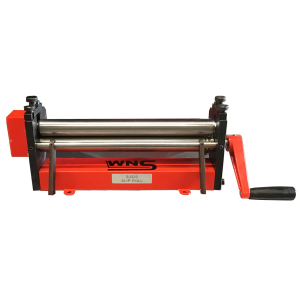
Compact hand-cranked rolls for light-gauge sheet, ideal for bench-mounted trim and repair work.
View machines →
FLOOR-STANDING, HAND-CRANKED
Hand Bending Rolls
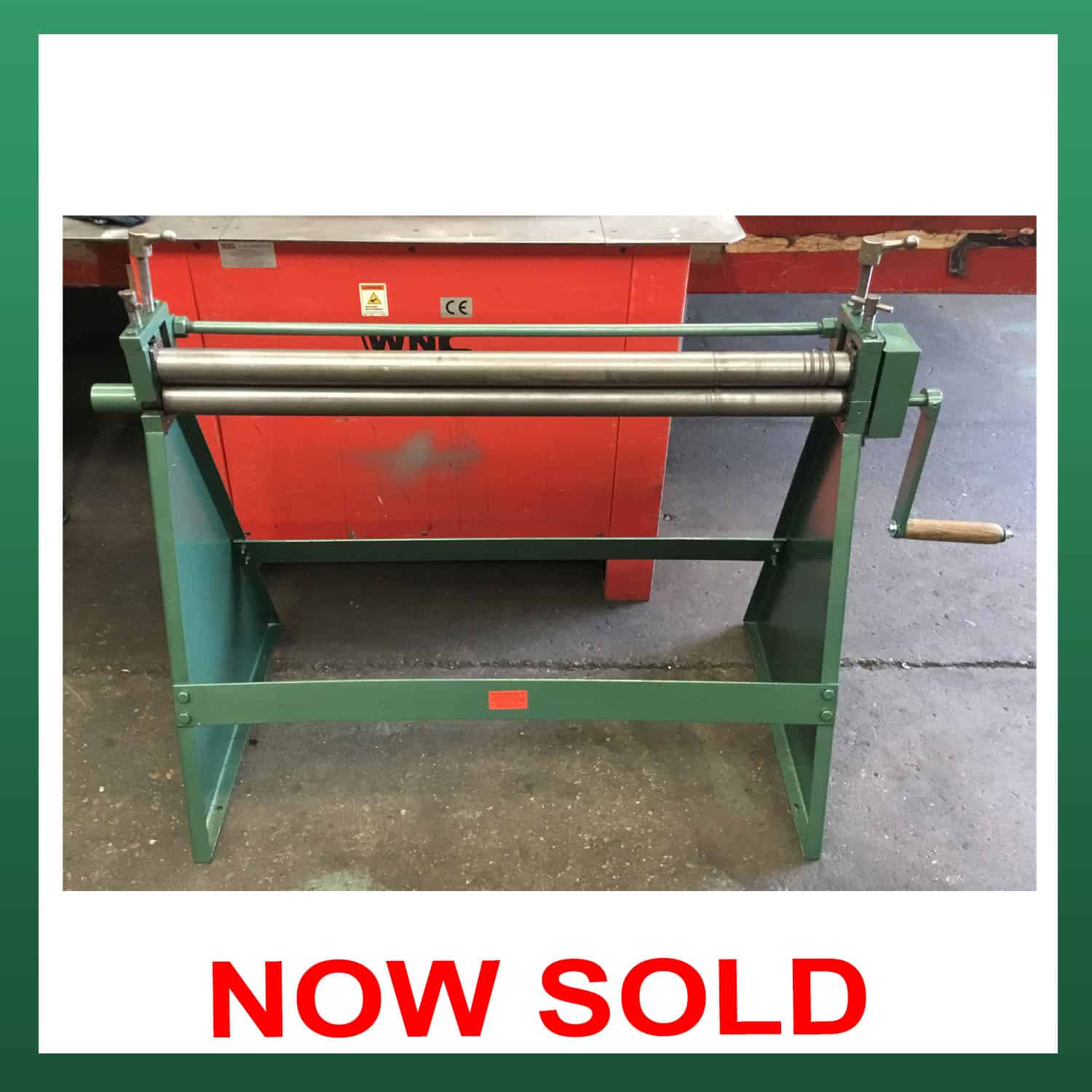
Full-size hand-cranked initial-pinch rolls for light-to-medium gauge cylinders and ducting.
View machines →
FOOTSWITCH CONTROLLED
Power Bending Rolls
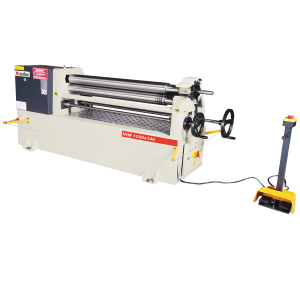
Motor-driven bending rolls with footswitch control for faster, hands-free production rolling.
View machines →
IMPORTED RANGE
ISITAN Hand & Power Bending Rolls
Imported pyramid-style bending rolls in hand and power drive, for medium capacities.
View machines →
HEAVIER GAUGE PLATE
Pyramid Bending Rolls (PBR)
Three-roll pyramid machines with adjustable top roll for heavier gauge plate and structural sections.
View machines →
OPTIONAL ATTACHMENT
Cone Rolling Attachments
Optional attachments that let developed cones pivot freely while rolling, at around half the rated capacity.
View machines →
For reference
Machines in the WNS range
Length × thickness
Choosing the right bending rolls
Bending rolls are specified by two figures: the roll length (the widest sheet you can feed through) and the material thickness capacity in mild steel. The two trade off against each other — a longer, thinner roll deflects more under load ("cambering"), so machines with a longer bed generally carry a lower thickness rating than a shorter one of the same roll diameter.
| Capacity | Typical machines | Best for |
|---|---|---|
| Up to 1.2mm | Bench & light hand rolls (BR320–BR1020) | Trim work, light ducting, edging |
| 1.2–2.0mm | Hand & power rolls (BR610–BR2000, PBR1020–1300) | Ducting, cladding, general fabrication |
| Up to 6mm+ | Pyramid & ISITAN power rolls | Structural cylinders, tanks, heavy plate |
Not sure which capacity suits your shop? Call our team on 01702 542 554 and we'll match a machine to your typical material.
Drive type
Manual, powered or pyramid?
Manual
Hand-cranked bending rolls suit low-volume work, mobile use and tight budgets — simple, robust, and no power supply needed.
Most popular
Powered
A footswitch-controlled motor drive frees both hands to guide the sheet, giving faster, more consistent rolling for production work.
Pyramid / Heavy Duty
Three-roll pyramid machines with power rotation and elevation handle the heaviest plate capacities with the least operator effort.
New, used & reconditioned
Buying new vs used bending rolls
A brand-new machine gives you the latest tooling, a full warranty and the longest service life — the right call for daily production. But a used or reconditioned bending rolls machine can be the smart buy when budget matters or you need a second machine quickly. Every used machine we sell is inspected, refurbished where needed, and backed by the same UK parts and service as our new range.
View used & reconditioned stock →Used & reconditioned examples
View live stock →Where they're used
Applications & industries
Ducting & Cladding
Rolling round duct sections, cones, casings and architectural cladding panels.
Tanks & Vessels
Curving heavier plate into cylindrical shells for tanks, hoppers and pressure vessels.
Automotive Restoration
Rolling curved body panels and trim sections for classic car and vehicle restoration.
General Fabrication
Any fabrication shop that needs to curve flat sheet or plate into round or tapered work.
After the sale
Spare parts, service & machinery wanted
A bending rolls machine is a long-term investment, and we keep yours running. We manufacture and stock bending rolls spare parts and consumables, service and repair most makes of bending rolls, and buy quality used machinery outright.
The WNS difference
Why choose W. Neal Services Ltd?
Buying a bending rolls machine is a long-term decision, so it pays to buy from a specialist who builds, supplies and supports the machines — not just sells them.
Over 40 years in the industry
Four decades designing, building and servicing sheet-metal machinery means we know what works on the workshop floor — and how to keep it running.
Spare parts stocked
We manufacture and stock spare parts and consumables, so a worn roll or part never means weeks of downtime.
Extensive knowledge base
A specialist team that genuinely knows sheet metal work. Tell us what you fabricate and we will match the right capacity and machine — no upselling.
Internationally recognised WNS brand
The Big Red Machines are known to fabricators across the UK, Europe and worldwide, with machinery supplied and shipped internationally.
Reconditioned machinery available
Fully checked used and reconditioned bending rolls — backed by the same UK parts and service as our new range.
UK manufacturing & service
British-built machines plus on-site and in-house service & repair for bending rolls, rollformers and more.
Know the terms
Bending rolls glossary
Common questions
Bending rolls FAQs
What is a bending roll (slip roll)?
A bending roll, or slip roll, is a machine with two or three parallel rolls that curve flat sheet metal into cylinders, cones and curved panels. The sheet is fed between the rolls and progressively curved as it passes through.
What's the difference between hand and power bending rolls?
Hand bending rolls are turned by a crank handle, suiting lower volumes and tighter budgets. Power bending rolls use a motor and footswitch control, freeing both hands to guide the sheet for faster, more consistent production rolling.
What roll length do I need?
Choose the roll length that matches the widest sheet you need to curve in one pass, then check the machine's material thickness capacity at that length — longer rolls generally have a lower thickness capacity due to deflection.
Do you sell used and reconditioned bending rolls?
Yes. We stock used and reconditioned hand and power bending rolls, all checked and backed by UK service and spare parts.
Do you supply spare parts and servicing?
Yes — we manufacture and stock bending rolls spare parts, and offer service, repair and refurbishment for most makes of bending rolls.
Do you ship bending rolls to Europe and worldwide?
Yes. We supply bending rolls and sheet metal machinery across the UK, Europe and worldwide. Contact our team for a delivered price.